
I remember a few years ago, after wrapping up a major project involving a high-performance FastAPI backend for a financial analytics platform, I decided it was time to explore new challenges. My skills were very specific: advanced Python, distributed systems, vector databases, and a knack for optimizing Ktor endpoints. I spent days sifting through job boards, religiously applying filters, and submitting applications. What struck me was the sheer disconnect: "Senior Python Developer" roles often meant maintaining legacy Django monoliths, while "Data Engineer" frequently revolved around ETL pipelines in Spark, neither of which fully aligned with my expertise. It felt like I was talking to a wall, or worse, a very primitive keyword search engine that couldn't grasp the nuance of my profile. This wasn't just inefficiency; it was a fundamental architectural flaw in how these platforms understood developer skills and job requirements. They all failed the same way: an inability to bridge the semantic gap between human language and actionable data.

The Root Cause: Primitive Search Architectures
The core issue isn't a lack of data; it's a lack of semantic understanding. Traditional job search engines, at their heart, are glorified inverted indices. They tokenize resumes and job descriptions, build a vocabulary, and then match keywords. Want a 'Kotlin developer' role? They'll find every instance of 'Kotlin'. But what about 'SwiftUI developer with Jetpack Compose experience'? Or a 'distributed systems engineer who has optimized MongoDB queries in a sharded cluster'? The tools fall flat. They can't infer intent, understand synonyms in context, or weigh the importance of skills based on project context. My experience optimizing Ktor APIs for sub-millisecond responses is qualitatively different from someone who just built a basic CRUD API with Ktor, yet many search algorithms would treat 'Ktor' as a binary match. This is precisely why choosing the right backend framework, like FastAPI or Ktor, is critical for building performant data processing layers. You can read more about their performance characteristics in my post on Ktor vs. FastAPI: A High-Performance Backend Comparison.
Limitations of Current Systems:
- Keyword Stuffing & Irrelevance: The arms race of keyword stuffing on resumes and job descriptions makes accurate matching harder. Developers add every buzzword under the sun, and recruiters pack JDs with every possible skill, diluting the signal.
- Lack of Contextual Understanding: A search for "ML engineer" can mean anything from a research scientist building new algorithms to an MLOps specialist deploying and monitoring models. Traditional tools struggle with this ambiguity, returning a wide spectrum of irrelevant results.
- Skill Hierarchies & Dependencies: A senior Android developer using Jetpack Compose implies deep understanding of Kotlin, coroutines, reactive programming, and modern Android architecture. A simple keyword search for "Kotlin" misses this rich context entirely, failing to recognize the implicit skills and experience.
- Data Silos & Schema Mismatches: Different platforms use different taxonomies for skills, experience levels, and industries. Resumes from one source might list "Python (Advanced)" while another uses a proficiency scale. Normalizing this unstructured, disparate data for intelligent search is a massive, often overlooked, undertaking.
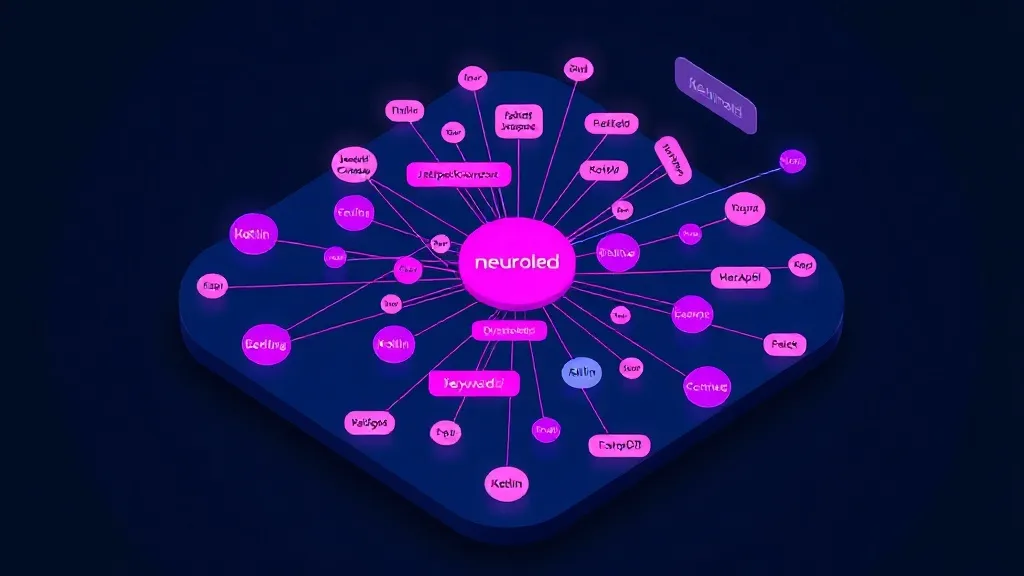
The Path Forward: Semantic Search Architecture
To truly solve this, we need to move beyond simple keyword matching and embrace semantic understanding. This requires a different architectural approach, leveraging modern Natural Language Processing (NLP) and vector databases.
Key Architectural Components:
- NLP for Feature Extraction: Instead of just keywords, we leverage modern NLP models (specifically Transformer-based models like BERT, Sentence-Transformers, or even OpenAI embeddings) to generate dense vector embeddings for resumes and job descriptions. These embeddings are numerical representations that capture the semantic meaning of the text, meaning texts with similar underlying concepts will have vectors close to each other in a high-dimensional space.
- Vector Databases: These high-dimensional vectors are then stored in specialized databases like Pinecone, Weaviate, Milvus, Qdrant, or even in-memory solutions like FAISS for smaller scale. These databases are optimized for lightning-fast similarity searches (e.g., k-nearest neighbors using cosine similarity) across millions or billions of vectors.
- Hybrid Search Strategies: A purely semantic approach might miss exact matches for specific company names or locations. The most effective systems combine traditional keyword search (for exact filters) with semantic search (for contextual skill and experience matching). This leverages the strengths of both paradigms.
- Continuous Feedback Loops: Implement mechanisms for users to provide feedback on search results (e.g., "relevant," "not relevant"). This feedback can be used to continuously fine-tune the embedding models or refine ranking algorithms, making the system smarter over time.
The Unsung Hero: Data Preprocessing and API Design
Before you even get to embedding generation, the quality of your input data is paramount. Resumes and job descriptions are notoriously messy. They contain jargon, inconsistent formatting, acronyms, and often irrelevant boilerplate. A robust data preprocessing pipeline is essential. This involves:
- Text Extraction and Cleaning: Removing HTML tags, special characters, irrelevant sections (e.g., footer disclaimers in JDs), and standardizing whitespace.
- Entity Recognition: Identifying and extracting key entities like skills, companies, education, and dates. While not strictly part of embedding, this can enhance search by allowing structured filters alongside semantic search.
- Normalization: Mapping variations of the same skill ('JS', 'JavaScript', 'ECMAScript') to a canonical form. This is a huge undertaking but yields significant dividends for search relevance.
On the API front, once your embeddings are generated and stored in a vector database, your search API needs to be high-performance. A FastAPI backend is ideally suited for this. You'd typically have an endpoint that:
- Receives a user query (e.g., 'Android developer with Compose and reactive programming').
- Generates an embedding for this query using the same model used for JDs/resumes.
- Queries the vector database for nearest neighbors (top K most similar job descriptions).
- Optionally, applies additional filters (location, salary range, company type) either pre- or post-semantic search.
- Returns ranked results.
Optimizing this API involves careful consideration of database indexing, caching strategies, and potentially asynchronous processing for embedding generation if it's not pre-computed. Building this requires solid backend architecture skills, the kind I use daily when designing complex systems or optimizing database interactions. A common pattern is to offload heavy embedding generation to dedicated worker services, keeping the main API responsive, similar to how background tasks are handled in large-scale Discord bot deployments. The power of Python for data processing and automation, even for complex tasks like natural language understanding, is immense. It's the same flexibility I leverage when building robust Discord bot functionalities, as discussed in my guide on Building a Discord Ticket Bot with Python. For anyone diving deeper into the architecture of modern web APIs, the official FastAPI documentation is an invaluable resource, showcasing how to build high-performance, asynchronous endpoints perfect for handling embedding generation requests.
Python for Semantic Embedding: A Glimpse
Here's a simplified Python example demonstrating how to generate embeddings using the sentence-transformers library. In a production system, this would be part of a larger data processing pipeline.
from sentence_transformers import SentenceTransformer
from typing import List

# Initialize a pre-trained model for generating embeddings
# 'all-MiniLM-L6-v2' is a good balance of speed and performance
# This model maps sentences/phrases to a 384-dimensional dense vector space
model = SentenceTransformer('all-MiniLM-L6-v2')

def get_text_embedding(text: str) -> List[float]:
    """Generates a dense vector embedding for a given text string."""
    # Ensure the input text is not empty
    if not text.strip():
        return [] # Return an empty list for empty text
    embedding = model.encode(text, convert_to_tensor=False)
    return embedding.tolist()

# Example Usage
job_description = "Senior Android Developer with extensive Jetpack Compose, Kotlin Coroutines, and MVVM architecture experience. Familiarity with GraphQL and CI/CD pipelines a plus."
resume_summary = "Highly experienced Mobile Engineer, specializing in native Android app development using Kotlin, Compose, and RxJava. Strong grasp of clean architecture principles and API integration. Recently worked on a KMM project."

job_embedding = get_text_embedding(job_description)
resume_embedding = get_text_embedding(resume_summary)

print(f"Job Description Embedding (first 5 dims): {job_embedding[:5]}...")
print(f"Resume Summary Embedding (first 5 dims): {resume_embedding[:5]}...")
# In a real system, these embeddings would be stored in a vector database
# for efficient similarity search using metrics like cosine similarity.
# You would also handle batches of texts for efficiency.
Understanding how to manage and query large datasets efficiently is a challenge common across many domains, from backend APIs to even managing state in complex mobile applications, a topic I often touch on when discussing architectural patterns, like those covered in my series on Android development and OS internals. This principle of efficient data handling applies whether you're building a semantic search engine or optimizing data flow in a mobile app, similar to how I approach performance considerations in mobile development frameworks like those explored in Your Guide to Kotlin Multiplatform Mobile.
Comparison: Keyword vs. Semantic Search
| Feature | Traditional Keyword Search | Semantic Search (Vector Embeddings) |
|---|---|---|
| Core Mechanism | Term frequency, inverted index, exact string matching | Vector space models, neural networks, similarity metrics (cosine similarity) |
| Understanding Context | Minimal; treats words as isolated tokens | High; captures nuances, synonyms, and relationships between words |
| Handling Synonyms | Requires explicit synonym lists or OR logic (e.g., "Java OR JVM") | Implicitly understands synonyms and related concepts; 'SwiftUI' is close to 'Jetpack Compose' conceptually for mobile UI frameworks |
| Relevance beyond Keywords | Limited to exact matches; often returns irrelevant results if keywords aren't present | Can find conceptually similar roles/resumes even without keyword overlap, leading to higher quality matches |
| Performance Metric | Recall (finding all instances of keywords), precision on exact matches | Precision and recall on semantic relevance; ability to find truly relevant but non-obvious connections |
| Complexity | Relatively simple to implement and scale for basic text search | Requires NLP expertise, vector databases, specialized infrastructure, and often GPU acceleration for training/inference |
| Scalability Challenge | Managing large inverted indices; keyword combinatorics can explode search space | High-dimensional vector storage and nearest neighbor search at extreme scales; memory and computational demands |
To truly grasp the foundational concepts behind these powerful NLP models and vector databases, I highly recommend 'Applied Text Analysis with Python: Enabling Language-Aware Data Products with Machine Learning' by Tony Ojeda, Rebecca Bilbro, and Benjamin Bengfort. It's an excellent resource for anyone looking to build intelligent text-based applications and is available on Amazon. For a deeper dive into the specifics of Transformer models and generating embeddings, the Hugging Face Transformers documentation offers comprehensive guides and examples on how to leverage state-of-the-art NLP models.

Frequently Asked Questions About Semantic Job Search
What's the biggest bottleneck in implementing semantic search for jobs at scale?
The primary bottleneck is often twofold: data quality and computational resources. Normalizing unstructured resume and job description text into a clean, consistent format suitable for embedding generation is crucial and complex. This requires robust preprocessing pipelines to handle varied inputs. Furthermore, generating and storing millions (or billions) of high-dimensional vectors, and performing nearest-neighbor searches in real-time across such a large dataset, requires significant processing power and specialized infrastructure like vector databases and potentially GPU-accelerated inference for embedding models. Efficient indexing and shard management for these vector stores are also critical challenges.
How accurate are modern NLP models for job-specific context?
Modern NLP models like those based on the Transformer architecture (e.g., BERT, RoBERTa, Sentence-Transformers) are remarkably accurate for general semantic understanding. For job-specific contexts, fine-tuning these models on domain-specific datasets (e.g., a large corpus of job descriptions and resumes) can significantly improve their performance, allowing them to better understand nuances like 'Kubernetes' vs. 'Docker' or the subtle differences between 'Full Stack Developer' and 'Backend Engineer' based on common industry usage. While out-of-the-box models provide a strong baseline, domain adaptation and continuous training on new data are key for peak accuracy and staying current with evolving tech stacks.
Can I build a simpler version of this myself?
Absolutely. You can start with off-the-shelf sentence embedding models (like those from the sentence-transformers library in Python) and a simple in-memory vector store (e.g., using scipy.spatial.distance.cosine for similarity calculations, or even FAISS for larger local datasets). For a small dataset of, say, a few hundred job descriptions and your own resume, you could build a proof-of-concept in a weekend using Python and FastAPI for a basic API. The complexity scales rapidly with data volume, the need for real-time performance, and the robustness required for handling diverse, messy real-world text inputs. It's an excellent project to learn about modern search architectures.
What's the role of traditional keyword search in a semantic system?
Even with advanced semantic search, traditional keyword matching still has a vital role, often in a hybrid approach. It's excellent for exact matches on specific entities like company names, locations, specific product names, or mandatory certifications (e.g., "PMP Certified"). Semantic search excels at conceptual similarity. A well-designed hybrid system might first filter by exact location (keyword match), then rank the remaining results by semantic similarity of skills and experience. This leverages the strengths of both approaches to deliver more precise and relevant results, minimizing false positives while maximizing discovery of genuinely aligned opportunities.
Need a Professional Mobile & Backend Developer?
I build premium native mobile apps (Android, iOS) and high-performance backend systems (FastAPI, Ktor). Let's collaborate on your next project!
Written by
Hazrat Ummar Shaikh
Android Developer with 4+ years of experience. Built production Android apps, Ktor backends, Discord bots, and SaaS products using Kotlin, Python, and MongoDB. Passionate about building robust systems and writing clean code.