
I remember a particularly brutal week when my team was battling an elusive native crash on a flagship Android app. Users were reporting sporadic freezes and app terminations, but our standard crash reporting tools (think Crashlytics) were only giving us 'unknown' or un-symbolicated stack traces deep within the NDK layer. We had C++ code integrating with a third-party library, and every crash report was a cryptographic puzzle. Production was bleeding, and we were effectively blindfolded, trying to debug a phantom. That’s when the brutal reality of truly seamless crash protection, especially with native code, hit me hard.
We, as developers, often live by the mantra of "fail fast, fix faster." But what happens when the 'fail' part is opaque, leaving you guessing in the dark? This isn't just an Android problem; iOS developers dealing with C/C++/Objective-C bridges or complex game engines face similar nightmares. The promise of a crash reporting system that not only captures these elusive native crashes but also reliably symbolificates them, scrubs sensitive data, and integrates directly with our issue trackers? That's not just a feature; it's a lifeline.

The Native Crash Conundrum: Why It's Different
When a Java or Kotlin application on Android (or Swift/Objective-C on iOS) crashes due to an unhandled exception, the JVM/runtime often provides a fairly readable stack trace. Tools like Crashlytics excel at capturing and presenting these. However, native crashes are a different beast entirely. These occur when the underlying C, C++, or Rust code (often used via Android NDK or directly integrated with iOS frameworks) hits a critical error: a segmentation fault, an illegal instruction, or memory corruption.
The stack traces from these crashes are often low-level memory addresses, function pointers, or mangled C++ symbols. If the application has been optimized and obfuscated (e.g., with ProGuard/R8 on Android, or default stripping on iOS for release builds), these traces become utterly meaningless without a symbolication step. You're looking at lines like 0xdeadbeef at libc.so + 12345 instead of com.example.mylibrary.NativeBridge.doSomethingCritical(NativeBridge.java:78). Debugging this is like trying to solve a puzzle where half the pieces are missing, and the other half are written in hieroglyphs.
Moreover, the crash might corrupt the process state so severely that traditional in-process crash handlers might fail to even record the event properly. This leads to silent crashes, where the app just disappears, and you have no telemetry whatsoever. This is where the concept of a robust, out-of-process or extremely resilient in-process crash client becomes critical.
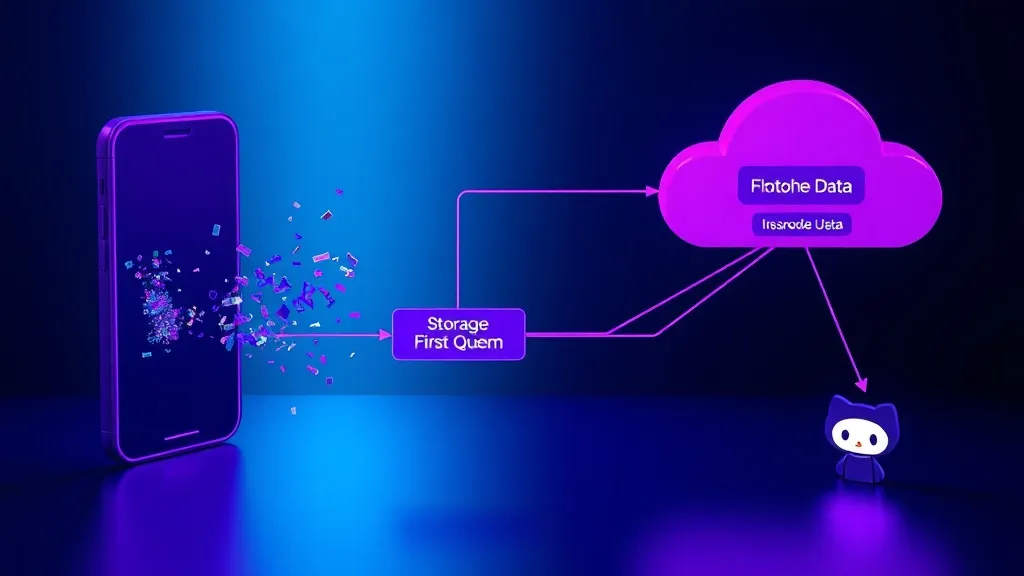
Building a Resilient Crash Reporting Pipeline: The Modern Approach
The emerging best practice, as exemplified by systems like the `com.codename1.crash` client mentioned in the prompt, involves a multi-pronged approach that addresses these native challenges head-on. It's about combining client-side resilience with sophisticated server-side processing.

1. Client-Side Capture & Data Scrubbing
The first step is capturing the crash reliably. For native crashes, this often means hooking into the OS's low-level signal handling mechanisms (e.g., POSIX signals on Linux/Android, Mach exceptions on iOS). This requires careful implementation, often in C/C++ itself, to ensure minimal overhead and maximum resilience even when the application process is in a severely corrupted state.
Once a crash is captured, the immediate concern is data privacy. Before any crash report leaves the device, it absolutely must be scrubbed of personally identifiable information (PII) or other sensitive data. This isn't just good practice; it's a legal requirement under regulations like GDPR and CCPA. A robust client-side component needs to:
- Intercept crash signals: Register signal handlers for relevant crash signals (e.g., SIGSEGV, SIGBUS, SIGILL).
- Collect minimal data: Gather stack traces, thread information, device specifics (OS version, model), and app version. Avoid any custom log data that might contain PII unless explicitly configured and scrubbed.
- Anonymize/Scrub: Implement regex-based or callback-based scrubbing rules to remove specific patterns from file paths, user data, or custom attributes.
On Android, this might involve JNI calls to a C++ layer that uses `sigaction` to install signal handlers. On iOS, similar low-level mach exception handling or `NSSetUncaughtExceptionHandler` for Objective-C exceptions (and potentially hooking into C++ exceptions) would be used. The goal is to get a raw, unsymbolicated, but potentially scrubbed crash dump.
// Simplified C++ example for Android NDK crash handler
#include
#include
#include
#include
#include

static void native_crash_handler(int signum, siginfo_t* info, void* reserved) {
__android_log_print(ANDROID_LOG_ERROR, Need a Professional Mobile & Backend Developer?
I build premium native mobile apps (Android, iOS) and high-performance backend systems (FastAPI, Ktor). Let's collaborate on your next project!
Written by
Hazrat Ummar Shaikh
Android Developer with 4+ years of experience. Built production Android apps, Ktor backends, Discord bots, and SaaS products using Kotlin, Python, and MongoDB. Passionate about building robust systems and writing clean code.