I remember debugging a critical incident for an industrial IoT client. Their system, designed with a heavily centralized microservice architecture, was struggling. A single, overloaded authentication service on the main cluster became a bottleneck, causing cascading failures across hundreds of edge devices. These devices, each controlling a vital piece of machinery, were effectively bricked, unable to authenticate and receive commands from the cloud. The 'periphery' – the devices themselves – lacked any meaningful autonomy. They were mere extensions of the core, utterly dependent. That painful experience hammered home a truth: true resilience, true scalability, doesn't just come from distributing workloads, but from empowering the periphery, giving it a form of 'sovereignty'.
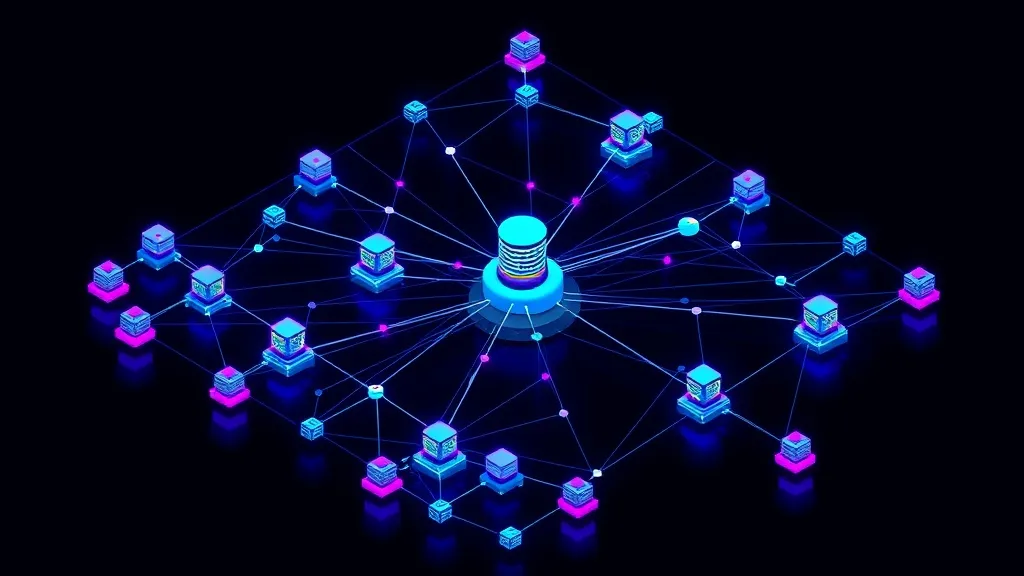
This isn't just about moving compute closer to the data source. It's about a fundamental shift in how we conceive of system components. Borrowing from the historical analogy, just as an experimental political concept ratified on the extreme edge of the known world led to sovereign nations, so too are our technical 'peripheries' — be they IoT devices, individual microservices, or AI agents — evolving towards a state of functional independence. We're moving from a hierarchical, client-server model to a more heterarchical, peer-to-peer paradigm where individual components can make decisions, operate, and even recover autonomously. This is the 'Sovereign Edge'.
Defining the Sovereign Edge: Beyond Distributed Systems
When I talk about the 'Sovereign Edge', I'm not merely talking about distributed systems or even edge computing in its most basic sense. Those are foundational, but sovereignty implies something more: self-governance, resilience, and operational independence from constant central orchestration. Imagine a smart factory where individual robotic arms can continue their tasks even if the central management server goes offline for a brief period, leveraging local models and cached instructions. Or consider an AI agent deployed on a user's device that adapts and learns without constantly phoning home for model updates or inference. These are manifestations of the sovereign edge.
This paradigm challenges the conventional wisdom that central control equates to stability. In reality, a single point of failure at the core can bring down an entire distributed periphery. By contrast, a sovereign edge architecture aims to minimize these critical dependencies, empowering individual units to function effectively and reliably, even in isolation or under partial network degradation.

Genesis: The Evolution to the Periphery
Our journey to the sovereign edge isn't sudden. It's an evolution driven by several forces:
- From Monolithic to Microservices: The decomposition of monolithic applications into smaller, independent services was the first major step towards distributed autonomy. Each microservice, ideally, manages its own data and business logic, interacting with others via well-defined APIs.
- Rise of IoT & IIoT: The proliferation of IoT devices introduced a new scale of 'periphery'. These devices often operate in environments with intermittent connectivity, high latency, or strict data residency requirements. Pushing intelligence and decision-making to the device itself becomes critical.
- AI on the Edge: Running AI inference locally on devices (edge AI) reduces latency, enhances privacy, and cuts down on bandwidth costs. This necessitates robust, self-contained AI models and runtime environments.
Each of these evolutionary steps pushed logic and data closer to the operational frontier, laying the groundwork for true sovereignty. But how do we architect for this level of independence?
Architecting for Sovereignty: Pillars of Autonomous Design
Building sovereign systems requires a deliberate shift in design philosophy. Here are the core pillars I focus on:
1. Loose Coupling and Event-Driven Architectures
Dependency is the enemy of sovereignty. Tightly coupled services create brittle systems where a failure in one propagates rapidly. My approach favors asynchronous communication and event-driven patterns. Instead of direct API calls between critical components, services publish events and subscribe to those they care about. This allows components to react to state changes without direct knowledge of the event producer's internal workings or even its immediate availability.
For example, an IoT device might publish a 'sensor_reading_critical' event to a message queue. Multiple services – an alerting service, a data archival service, and a local anomaly detection agent – can all consume this event independently. If one consumer is down, the others are unaffected.
# Example: FastAPI publishing an event to a Kafka topic
from fastapi import FastAPI
from kafka import KafkaProducer
import json
import os

app = FastAPI()
producer = KafkaProducer(bootstrap_servers=os.getenv("KAFKA_BROKERS", "localhost:9092"),
                        value_serializer=lambda v: json.dumps(v).encode('utf-8'))

@app.post("/sensor-event")
async def publish_sensor_event(data: dict):
    event_type = data.get("type")
    if event_type == "critical_reading":
        producer.send("iot_events", data)
        producer.flush()
        return {"status": "critical event published"}
    return {"status": "event received"}
2. Local State and Decision Making
A truly sovereign entity must be capable of maintaining its own operational state and making localized decisions without constant external validation. This often means replicating necessary data to the edge or designing systems that can function with eventual consistency. For AI agents, this translates to models capable of performing inference and even local retraining based on observed data, becoming self-curious AI agents that adapt to their specific environment.
Consider an autonomous drone: it needs to navigate, avoid obstacles, and execute its mission based on its local sensor data and pre-loaded mission parameters, not continuous, high-latency commands from a ground station. Its sovereignty is its ability to operate independently within its defined boundaries.
3. Resilience and Self-Healing
Sovereign components expect failure. They are designed with mechanisms to cope. This includes:
- Circuit Breakers: To prevent cascading failures when a dependency is unhealthy.
- Retries with Exponential Backoff: For transient network issues or temporary service unavailability.
- Idempotent Operations: Ensuring that retrying an operation multiple times has the same effect as performing it once.
- Local Caching: Storing essential data locally to operate during network outages.
4. Security and Identity at the Edge
Empowering the periphery means securing it rigorously. Each sovereign component needs a robust identity and secure communication channels. This extends beyond simple API keys to mutual TLS, hardware-backed security modules for IoT devices, and strict access control policies for local resources. Managing secrets for a fleet of sovereign edge devices or services requires sophisticated approaches, often involving dedicated secret management services or secure provisioning pipelines.

Implementation Patterns for the Sovereign Edge
My toolbox for building these systems often revolves around high-performance, developer-friendly frameworks:
Python & FastAPI for Edge Backends
For lightweight, high-performance services that can run on constrained edge devices or as dedicated microservices, Python with FastAPI is a clear winner. Its asynchronous nature and Pydantic-driven validation make it ideal for rapid development and robust API endpoints. For detailed information and advanced usage, refer to the official FastAPI documentation. I've used FastAPI to build everything from small IoT gateways that aggregate sensor data to dedicated inference endpoints for edge AI models.
Deploying these services efficiently is key to maintaining their sovereignty. For production, I often recommend platforms like DigitalOcean Droplets or Vultr VPS instances. Their balance of cost-effectiveness, performance, and ease of management makes them excellent choices for hosting these independent components. In fact, I've outlined the process for a similar setup in Minimal FastAPI Deployment on DigitalOcean: A Developer's Guide, which walks through getting a robust FastAPI service up and running quickly.
# Basic FastAPI setup for an edge service
from fastapi import FastAPI, HTTPException
from pydantic import BaseModel
import uvicorn

app = FastAPI()

class DeviceCommand(BaseModel):
    device_id: str
    command: str
    payload: dict

@app.post("/command")
async def receive_command(cmd: DeviceCommand):
    # Here, an edge device would process the command locally
    if cmd.device_id == "edge-device-001":
        print(f"Executing command '{cmd.command}' for device {cmd.device_id} with payload {cmd.payload}")
        return {"status": "command executed", "device_id": cmd.device_id}
    raise HTTPException(status_code=404, detail="Device not found or unauthorized")

if __name__ == "__main__":
    # Run with `uvicorn main:app --host 0.0.0.0 --port 8000` for production
    uvicorn.run(app, host="0.0.0.0", port=8000)
Kotlin & Ktor for Robust Services
When I need cross-platform capabilities, particularly for more complex edge services or higher-performance backends that might also serve mobile applications, Kotlin with Ktor is my go-to. Kotlin's conciseness, null safety, and excellent concurrency features make it a powerhouse for building robust, maintainable services. Ktor, being a lightweight asynchronous framework, is perfect for highly concurrent I/O operations, which are common in event-driven sovereign architectures.
This framework shines when you need to handle complex business logic or integrate with various systems securely. My experience building resilient backend components with Kotlin reinforces its suitability for systems that demand high availability and performance. For deeper insights into Kotlin's capabilities beyond mobile, check out Kotlin Unchained: Beyond Mobile, Powering Backends & Bots.
// Ktor example for an edge data aggregator
import io.ktor.server.application.*
import io.ktor.server.response.*
import io.ktor.server.routing.*
import io.ktor.server.engine.*
import io.ktor.server.netty.*
import io.ktor.http.HttpStatusCode

fun main() {
    embeddedServer(Netty, port = 8080) {
        routing {
            get("/health") {
                call.respondText("OK")
            }
            post("/data") {
                // In a real scenario, process and store data locally
                call.respond(HttpStatusCode.Accepted, "Data received and processed locally")
            }
        }
    }.start(wait = true)
}
Database Systems for Sovereignty
For local state, the choice of database is critical. Embedded databases like SQLite are excellent for resource-constrained IoT devices. For more robust edge servers or microservices, I often lean on MongoDB. Its flexible schema is invaluable when dealing with diverse data from various edge sources, and its distributed nature (with replica sets and sharding) allows for resilient, highly available deployments that can sync with central stores as needed, or function autonomously.
Observability in a Sovereign Landscape
Debugging and monitoring a system where components are intentionally autonomous and distributed presents unique challenges. Traditional centralized logging and metrics aggregation can fall short when an `edge device` is offline or when the volume of data makes central ingestion impractical.
This is where a shift in observability mindset is required. We need to empower the edge components to report on their own health, context, and operational state intelligently. Think beyond basic metrics to more granular, semantic insights. For systems involving AI, this becomes even more crucial. Understanding why an autonomous AI agent made a particular decision, especially if it operates independently, demands sophisticated observability patterns. This resonates deeply with the principles discussed in Semantic Observability for Production RAG: Beyond Basic Metrics, where the focus is on contextual, rather than just quantitative, insights.
We need robust local logging, perhaps using a local Kafka instance or persistent queues to buffer telemetry data until connectivity is restored. Distributed tracing becomes indispensable, even if traces are stitched together asynchronously. Health checks at the edge must be comprehensive, reporting on not just service uptime, but also the validity of local data, model integrity, and resource utilization.
Here's a comparison of traditional vs. sovereign observability approaches:
| Feature | Traditional Centralized Observability | Sovereign Edge Observability |
|---|---|---|
| Data Ingestion | Real-time streaming to central aggregators | Buffered, asynchronous, local first; opportunistic sync |
| Monitoring Scope | Global, holistic view of all components | Local health, contextual data, then global aggregation |
| Failure Detection | Centralized alerts on service degradation | Edge-initiated self-reporting, local anomaly detection |
| Debugging | Correlating logs/traces from central system | Contextual local logs, distributed tracing (eventual) |
| Resilience to Outages | Central outage impacts all monitoring | Edge retains monitoring capabilities during outages |
Challenges and the Future of Sovereign Systems
While the sovereign edge offers immense benefits, it's not without its challenges:
- Data Consistency: Achieving strong global consistency across sovereign, often disconnected, entities is incredibly difficult. Eventual consistency is often the pragmatic compromise.
- Orchestration vs. Autonomy: Finding the right balance between necessary central orchestration (e.g., software updates, policy enforcement) and local autonomy is an ongoing design challenge.
- Security Surface Area: Each sovereign entity represents a potential attack vector. Securing a vast, diverse fleet of autonomous components is complex.
- Ethical AI: As AI agents gain more autonomy, ensuring their decisions align with ethical guidelines and can be audited becomes paramount. This is a frontier that requires significant research and development.
The future, I believe, lies in increasingly intelligent and autonomous peripheries. We'll see more sophisticated self-healing mechanisms, advanced edge AI models capable of complex reasoning, and even truly decentralized identity and trust frameworks that underpin these sovereign systems. The 'declarations from the periphery' are just beginning.
FAQ: Building Sovereign Edge Systems
Q1: What are the key indicators that a system needs a 'sovereign edge' architecture?
A1: Look for scenarios with intermittent or high-latency network connectivity, strict data residency or privacy requirements, high bandwidth costs for data egress to the cloud, or critical operational dependencies on real-time local decisions. If a central point of failure has severe cascading impacts, or if devices need to operate reliably even when disconnected, you're likely a candidate for sovereign edge principles.
Q2: How do you manage software updates and configuration for a large fleet of sovereign edge devices without centralized control?
A2: While sovereign components operate autonomously, they still require management. This often involves a 'management plane' that operates with eventual consistency. Strategies include over-the-air (OTA) update mechanisms that can cache updates locally and apply them during low-activity periods, decentralized peer-to-peer update distribution, and declarative configuration management where devices pull desired state and apply it. Tools like Fleet Device Management (FDM) solutions or even custom Discord bots can help orchestrate these updates, ensuring they're applied securely and reliably.
Q3: What are the primary security challenges with sovereign edge architectures, and how can they be mitigated?
A3: The primary challenges include securing individual devices/services, managing their identities, and ensuring secure communication in a decentralized environment. Mitigation strategies include hardware-backed root of trust for IoT devices, mutual TLS for inter-service communication, strong identity and access management (IAM) at the edge, encrypted local storage, and regular security audits. Implementing a robust secret management strategy that avoids hardcoding credentials and uses secure provisioning is also crucial.
Q4: Can serverless functions be considered part of a sovereign edge architecture?
A4: It depends on the context. While serverless functions (like AWS Lambda or Google Cloud Functions) offer statelessness and event-driven scalability, they are typically hosted in a centralized cloud environment. They can serve as powerful processing units for events originating from the sovereign edge (e.g., processing buffered data once it reaches the cloud). However, if we're talking about functions running directly at the true 'edge' (e.g., on a local gateway or device), then yes, edge serverless platforms (like AWS Greengrass Lambda or Azure IoT Edge Modules) can embody aspects of sovereign compute, providing localized, on-demand execution without continuous central management.
Need a Professional Mobile & Backend Developer?
I build premium native mobile apps (Android, iOS) and high-performance backend systems (FastAPI, Ktor). Let's collaborate on your next project!
Written by
Hazrat Ummar Shaikh
Android Developer with 4+ years of experience. Built production Android apps, Ktor backends, Discord bots, and SaaS products using Kotlin, Python, and MongoDB. Passionate about building robust systems and writing clean code.