I remember a frantic Tuesday morning. We had just pushed a new version of our internal knowledge base RAG system – a critical tool for our support engineers – and initial checks showed all green. API response times were stellar, database connections stable, and not a single 500 error insight. Yet, within an hour, our Slack channel was ablaze. Users were reporting the bot confidently fabricating information, citing non-existent policies, and generally being "creatively unhelpful."
Traditional observability, the kind that screams when a Java NullPointerException crashes a microservice or a database query times out, was silent. It was a stark reminder: a RAG system can be "healthy" by infrastructure metrics, yet semantically broken. This, my fellow developers, is the chasm that Semantic Observability aims to bridge, especially for production-grade Retrieval-Augmented Generation (RAG) pipelines.
The problem with RAG is not just about a service failing; it’s about a service failing intelligently, generating plausible-sounding but incorrect information. This is far more insidious than a hard crash, as it erodes trust and can lead to costly operational errors. In my journey, from automating CS exams with an AI-powered study app to deploying complex customer service bots, I've repeatedly encountered this nuanced challenge.
Why Traditional Observability Falls Short for RAG
For a typical backend service, metrics like CPU usage, memory consumption, latency, error rates, and throughput provide a comprehensive view of its health. When I'm building high-performance API backends with FastAPI or Ktor, these are my bread and butter. If a /health endpoint returns a 500, I know where to look. But RAG pipelines introduce entirely new failure modes:
- Retrieval Relevance: Did the retriever fetch the most pertinent documents for the query?
- Context Faithfulness: Did the LLM base its answer only on the provided context, or did it "hallucinate"?
- Answer Coherence & Fluency: Is the generated answer understandable and well-formed?
- Completeness: Does the answer address all aspects of the user's query?
- Safety: Does the answer contain harmful or biased content?
None of these critical aspects are captured by a standard Prometheus metric or an ELK stack entry alone. We need to peer into the semantic quality of the pipeline's output at various stages.
Let's consider a practical scenario. A user asks: "What is the refund policy for premium subscriptions?"
- Traditional View: Query received, API responded in 150ms, status 200. Success!
- Semantic View: Query received. Retriever fetched documents about "standard subscription terms" and "billing cycles" but missed the "premium refund policy" document. LLM generated an answer based on irrelevant context, leading to an incorrect refund policy being communicated. Semantic failure, infrastructure success.
This gap is precisely why we need dedicated semantic observability.
Pillars of Semantic Observability for RAG
To truly understand and ensure the reliability of RAG systems in production, we need to extend our observability practices. I break this down into four core pillars:
1. Deep Traceability & Spans
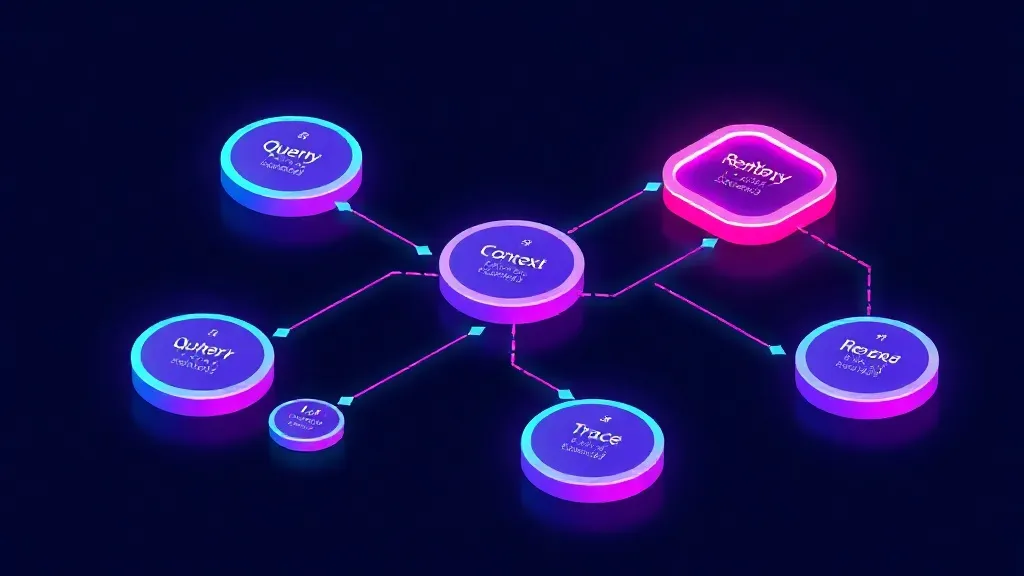
Just like a request tracing in a microservice architecture, we need to trace the journey of a user query through the RAG pipeline. This involves creating spans for each significant operation:
- Query Preprocessing: Tokenization, rephrasing, intent detection.
- Embedding Generation: Input query embedding.
- Retrieval: Document search, ranking, reranking. What documents were retrieved? What were their scores?
- Context Assembly: How was the final context presented to the LLM?
- LLM Invocation: The actual call to the Large Language Model, including the prompt template used, model parameters (temperature, top_p, max_tokens), and the raw LLM response.
- Post-processing: Any parsing, filtering, or formatting of the LLM's output.
Each span should capture relevant metadata. For instance, the retrieval span should log the IDs and titles of the top-k retrieved documents and their similarity scores. The LLM invocation span should store the full prompt sent and the raw model output.
import uuid
import time
from typing import List, Dict, Any

class RAGTracer:
    def __init__(self):
        self.traces = {}

    def start_trace(self, query: str) -> str:
        trace_id = str(uuid.uuid4())
        self.traces[trace_id] = {
            "query": query,
            "steps": [],
            "start_time": time.time()
        }
        return trace_id

    def add_step(self, trace_id: str, step_name: str, data: Dict[str, Any]):
        if trace_id not in self.traces:
            print(f"Warning: Trace ID {trace_id} not found.")
            return
        self.traces[trace_id]["steps"].append({
            "name": step_name,
            "timestamp": time.time(),
            "data": data
        })

    def end_trace(self, trace_id: str, final_answer: str):
        if trace_id not in self.traces:
            print(f"Warning: Trace ID {trace_id} not found.")
            return
        self.traces[trace_id]["end_time"] = time.time()
        self.traces[trace_id]["duration"] = self.traces[trace_id]["end_time"] - self.traces[trace_id]["start_time"]
        self.traces[trace_id]["final_answer"] = final_answer
        print(f"Trace {trace_id} completed: {self.traces[trace_id]}")

# Example Usage:
tracer = RAGTracer()
query = "How to configure a custom Discord bot with FastAPI?"
trace_id = tracer.start_trace(query)

# Simulate retrieval step
retrieved_docs = [{"id": "doc1", "title": "FastAPI Bot Guide"}, {"id": "doc2", "title": "Discord.py Basics"}]
tracer.add_step(trace_id, "retrieval", {"documents": retrieved_docs, "k": 2})

# Simulate LLM call
llm_response_data = {"prompt": "...", "model_output": "..."}
tracer.add_step(trace_id, "llm_invocation", llm_response_data)

final_answer = "You can use FastAPI for your backend and discord.py or a custom client for your bot logic."
tracer.end_trace(trace_id, final_answer)
Tools like LangChain's internal tracing (now part of LangSmith) or implementing OpenTelemetry for custom spans are invaluable here. This level of detail allows us to pinpoint exactly where things went sideways. For more complex, self-curious AI agents, understanding these internal states is even more critical, as I've explored when building self-curious AI agents.
2. Semantic Metrics & Evaluation
This is where we move beyond simple counts and durations into the qualitative assessment of RAG performance. We need metrics that reflect the meaning and accuracy of the output. The RAGAS framework is an excellent example, providing metrics like:
- Faithfulness: Measures how factually consistent the generated answer is with the provided context.
- Answer Relevance: How relevant is the answer to the user's query?
- Context Recall: How well did the retrieved context cover all the necessary information to answer the query?
- Context Precision: How precise is the retrieved context? Are there irrelevant documents mixed in?
Calculating these metrics in production for every single query can be computationally expensive. A common strategy is to run these evaluations asynchronously on a sample of production traffic or on specific "golden" datasets that mimic real-world queries. This is similar to the approach I detailed in the eval harness that saved my RAG pipeline from production failure.
Here's a simplified conceptual example of calculating a "faithfulness" score:
from sklearn.metrics.pairwise import cosine_similarity
from sentence_transformers import SentenceTransformer # pip install sentence-transformers

model = SentenceTransformer('all-MiniLM-L6-v2')

def calculate_faithfulness(answer: str, retrieved_context: str) -> float:
    """Simplified conceptual faithfulness score based on semantic similarity."""
    # In a real scenario, you'd break down the answer into statements
    # and check each against the context for support using an LLM or NLI model.
    # For demonstration, we'll use overall similarity.

    answer_embedding = model.encode([answer], convert_to_tensor=True)
    context_embedding = model.encode([retrieved_context], convert_to_tensor=True)

    # Cosine similarity ranges from -1 to 1. Normalize to 0-1 for a 'score'.
    similarity = cosine_similarity(answer_embedding, context_embedding)[0][0]

    # A very basic, illustrative conversion. Real faithfulness is more nuanced.
    return (similarity + 1) / 2 # Scale from -1..1 to 0..1

# Example Usage:
answer = "The policy states refunds are available within 30 days for premium users."
context_good = "Premium subscription refunds are processed within 30 days of purchase."
context_bad = "Standard user refunds require a written request within 14 days."

print(f"Faithfulness (Good Context): {calculate_faithfulness(answer, context_good):.2f}")
print(f"Faithfulness (Bad Context): {calculate_faithfulness(answer, context_bad):.2f}")
Beyond RAGAS, consider domain-specific metrics. If your RAG is for code generation, perhaps a metric for code executability or adherence to style guides. If it's for legal documents, accuracy against legal precedents. The key is to define what "good" looks like for your specific application.
3. Advanced Logging & Storage
Standard logs (access logs, error logs) are insufficient. We need rich, structured logs at every step of the RAG pipeline. This means logging:
- Full user query and its variations.
- All retrieved documents: IDs, titles, snippets, and their raw text content.
- The exact prompt template fed to the LLM.
- All LLM parameters: temperature, top_p, max_tokens.
- Raw LLM output.
- Final processed answer.
- Any generated embeddings or vectors (potentially anonymized/hashed if sensitive).
These logs, ideally stored in a searchable database like MongoDB (my go-to for flexible schemas) or ElasticSearch, become the bedrock for debugging and post-mortem analysis. When a user reports an issue, having the full trace and all intermediate artifacts allows rapid reproduction and root cause analysis. Imagine trying to debug why an LLM hallucinated without knowing the exact context it was given – it's like trying to fix a bug without the stack trace. The FastAPI backend for such a logging service would need to be robust and efficient, especially if dealing with high throughput.
4. Intelligent Alerting & Remediation
With deep traceability and semantic metrics in place, we can set up intelligent alerts. Traditional alerts might flag if the API latency exceeds 500ms. Semantic alerts would flag:
- A sudden drop in the average "faithfulness" score below a critical threshold.
- An unexpected increase in "hallucination" flags (derived from a classifier on LLM output).
- A significant deviation in the average embedding similarity between queries and retrieved documents.
- A pattern of specific document IDs being retrieved for irrelevant queries.
These alerts should trigger automated actions where possible (e.g., rerunning a retrieval index, switching to a different LLM model) or notify engineers for manual intervention. Building such sophisticated alerting requires a robust platform, and for hosting high-performance backends that process this kind of data, I often recommend reliable VPS providers like DigitalOcean Droplets. Their scalable infrastructure is perfect for deploying your monitoring and evaluation services alongside your RAG pipelines.
Implementing Semantic Observability: Practical Steps
Here’s a conceptual comparison of traditional vs. semantic observability for RAG:
| Feature | Traditional Observability | Semantic Observability (for RAG) |
|---|---|---|
| Focus | System health (CPU, memory, network, errors) | Application logic health, output quality, user experience |
| Metrics | Latency, throughput, error rate, resource utilization | Faithfulness, answer relevance, context recall, hallucination rate, embedding drift |
| Data Sources | Infrastructure agents, application logs (basic) | Detailed RAG pipeline traces, intermediate LLM inputs/outputs, embedding vectors, human feedback |
| Alerting | Service down, high error rate, resource exhaustion | Low semantic quality score, high hallucination rate, context retrieval failures |
| Tools | Prometheus, Grafana, ELK Stack, Datadog | LangSmith, Arize, Weights & Biases, custom RAGAS-based evaluators, OpenTelemetry, custom dashboards |
| Debugging | Stack traces, log analysis for exceptions | Full query traces, retrieved context, exact prompt, LLM raw response, semantic scores |
To start, consider these steps:
- Instrument Your Pipeline: Use OpenTelemetry or a similar framework to instrument every step of your RAG pipeline. This includes custom spans for retrieval, LLM invocation, and post-processing. Make sure to attach relevant attributes (document IDs, scores, model names, temperatures, etc.) to these spans. For backend systems, OpenTelemetry's official documentation provides excellent guides for various languages, including Python and Kotlin, which is what I primarily use for my API backends.
- Define Your Semantic Metrics: Identify the critical quality attributes for your RAG application. Is it factual accuracy, completeness, conciseness, or safety? Implement (or integrate with existing) RAGAS metrics or develop custom evaluators.
- Batch Evaluation: Running real-time LLM-based evaluations for every query is costly. Instead, implement a system to run these evaluations asynchronously on a representative sample of production queries or on a dedicated validation dataset.
- Build Custom Dashboards: Extend your Grafana or other observability dashboards to include these semantic metrics. Visualize trends in faithfulness, relevance, and other scores over time. This helps you quickly spot regressions after deployments or data updates.
- Establish Alerting: Set up alerts based on thresholds for your semantic metrics. For example, if the average faithfulness score drops by 10% within an hour, trigger an alert.
- Version Control for Prompts & Data: Treat your prompt templates, retrieval configurations, and embedding models as code. Version control them rigorously.
If you're delving into building open-source LLM observability solutions, you'll find that many of these principles translate directly, regardless of whether you're building a fully managed solution or a DIY stack.

Challenges and Considerations
- Cost: Running LLM-based evaluations on production traffic can be expensive. Strategize sampling techniques or use smaller, cheaper models for initial filtering.
- Latency: Integrating complex semantic checks directly into the request path can add latency. Prioritize async evaluation for most metrics.
- Ground Truth: Obtaining ground truth for RAG outputs is hard. Human feedback is invaluable, but scaling it is a challenge. Active learning or programmatic labeling can help.
- Data Volume: Detailed traces and logs for every RAG interaction can generate massive amounts of data. Plan for efficient storage, indexing, and retention policies.
Remember, the goal isn't just to catch errors, but to foster continuous improvement. By understanding exactly how and why your RAG system is performing at a semantic level, you can make informed decisions about model fine-tuning, retrieval strategy adjustments, and data pipeline improvements. This proactive approach is crucial for maintaining user trust and operational efficiency in your AI-powered applications.

FAQ
Q1: What's the difference between RAGAS and traditional NLP evaluation metrics?
A1: Traditional NLP metrics often focus on surface-level text similarity (e.g., BLEU, ROUGE for machine translation or summarization) or classification accuracy (e.g., F1-score for sentiment analysis). RAGAS, however, is specifically designed for Retrieval-Augmented Generation systems. It evaluates semantic aspects crucial for RAG, such as how factually consistent the answer is with the retrieved context (Faithfulness), how well the answer addresses the query (Answer Relevance), and the quality of the retrieved context itself (Context Recall, Context Precision). It uses LLMs to perform these evaluations, going beyond simple token matching.
Q2: Can I use existing observability tools like Prometheus and Grafana for Semantic Observability?
A2: Yes, absolutely, but with extensions. Prometheus and Grafana are excellent for collecting and visualizing numerical metrics. You can feed your custom semantic metrics (like Faithfulness score, Answer Relevance score, or hallucination rate) into Prometheus and then visualize them in Grafana dashboards. However, for deep traceability and storing detailed, unstructured RAG-specific data (like full prompts, retrieved documents, raw LLM outputs), you'll likely need additional tools like an OpenTelemetry collector/backend (e.g., Jaeger, Tempo) for traces, and a document store like ElasticSearch or MongoDB for detailed logs, which can then be correlated with your traditional metrics.
Q3: How do I handle PII (Personally Identifiable Information) when implementing detailed RAG logging and tracing?
A3: Handling PII is critical. You must implement robust data anonymization, pseudonymization, or redaction techniques at every stage where PII might appear in queries, retrieved documents, or LLM outputs. This could involve using libraries to detect and mask PII fields before logging, or ensuring that your data retention policies comply with privacy regulations (like GDPR, CCPA). For sensitive data, consider hashing or encrypting embeddings rather than storing them in plain text. Always design your logging and tracing with a 'privacy-by-design' mindset.
Q4: What's a good starting point for integrating OpenTelemetry into my RAG pipeline built with Python/FastAPI?
A4: For a Python/FastAPI RAG pipeline, start by installing the OpenTelemetry Python SDK and relevant instrumentation packages (opentelemetry-api, opentelemetry-sdk, opentelemetry-instrumentation-fastapi, opentelemetry-exporter-otlp). You'll set up a TracerProvider and configure it to export traces to an OTLP-compatible backend (like Jaeger or a custom OpenTelemetry Collector). Then, apply the FastAPI instrumentation middleware. For custom RAG steps (retrieval, LLM call), you'll manually create spans using tracer.start_as_current_span("my-rag-step") and add attributes to them (e.g., retrieved document IDs, LLM prompt). This provides granular visibility into each component's performance and context.
Need a Professional Mobile & Backend Developer?
I build premium native mobile apps (Android, iOS) and high-performance backend systems (FastAPI, Ktor). Let's collaborate on your next project!
Written by
Hazrat Ummar Shaikh
Android Developer with 4+ years of experience. Built production Android apps, Ktor backends, Discord bots, and SaaS products using Kotlin, Python, and MongoDB. Passionate about building robust systems and writing clean code.